Wine shaped the earliest debates about trade, taxation and political authority far more than we usually admit. As the U.S. Supreme Court decides whether a president can impose sweeping global tariffs under emergency powers, the justices circle an old anxiety: tariffs function as taxes, and imposing taxes belongs to the legislature. Anyone who knows the Enlightenment will recognise this concern. The first modern thinkers who worried about unchecked authority did so while watching wine move across borders, sometimes smoothly and sometimes not at all.
Wine wasn’t a pleasant background to their work. It served as a working dataset. Claret, Champagne, Port and Burgundy revealed how consumers behave, how merchants adapt, and how governments distort markets when they overreach. It feels fitting that one of the plaintiffs in the current case is a small New York wine importer, V.O.S. Selections. Merchants like this once taught John Locke, Montesquieu and Adam Smith what economic liberty looked like. They are now at the centre of a constitutional fight over who controls trade.
Locke (1632–1704) began his education in political economy in Bordeaux. His patron, the Earl of Shaftesbury, believed England’s dependence on French claret left England exposed. If Louis XIV wanted leverage, he only needed to choke off the wine trade. So, Shaftesbury sent Locke across the Channel to observe conditions on the ground. Guided by his négociant friend William Popple, Locke visited Arnaud de Pontac’s estate at Haut-Brion. His journal captures a proto-scientist’s curiosity: he noted how a ditch separated great terroir from ordinary soil, and he recorded with irritation that Pontac blended wines from other estates into the famous cru. “Making a shift,” he called it. Half the wine sold as Haut-Brion wasn’t.
Locke didn’t condemn Pontac so much as the English buyers who insisted on the “best wine at any rate,” driving fine wine inflation to absurd heights. The lesson was plain: fashion and political dependency warped markets. His reconnaissance fed into a Whig plan to plant vineyards in the Carolina colony and reduce reliance on France. His political thought grew alongside his vineyard notes.
Richard Cantillon (c. 1680–1734) took the analysis further. Banker, speculator, and Champagne merchant, he spent years watching how innovation and reputation shaped wine prices. He saw how the recent méthode champenoise technique created a luxury product, and how Bordeaux thrived once it exported higher-value wines to England rather than commodity wine. These observations fed directly into his theory that economies adjust through entrepreneurial risk rather than government command. He knew from experience that a merchant who misread foreign tastes went bankrupt, while one who adapted survived. His Essay on the Nature of Trade gave Europe its first clear picture of the entrepreneur, a figure rooted, quite literally, in the wine trade.
Montesquieu (1689–1755) learned these lessons at home. As a major grower in the Entre-Deux-Mers and the Graves, he fought the royal Intendant who tried to halt new Bordeaux vineyard plantings after 1725. He argued that growers tracked market shifts better than royal officials. English demand changed from year to year; Dutch preferences ran in cycles; and clumsy restrictions stifled initiative. Montesquieu sold his Gascon wines directly to British nobles and relied on Huguenot refugees, Jacobite merchants, and Chartrons négociants who knew how to move both bottles and manuscripts past suspicious authorities. His practical defence of local judgment and divided authority later hardened into the philosophical separation of powers. Wine didn’t inspire the idea, but it taught him how centralised power failed.
David Hume (1711–1776), a friend and correspondent of Montesquieu, brought a sharper edge. He loved claret and understood the wine business from the inside. In his youth, he worked in a Bristol wine and sugar house; later he lived for years in Champagne and Anjou. He even tried to broker Burgundy shipments between Dijon and London. His friendships with Jacobite and French intermediaries kept him supplied with both manuscripts and wine. Through those same networks he traded essays with Montesquieu, Helvétius, and the physiocrats.
Hume wrote two essays—“Of the Balance of Trade” and “Of the Jealousy of Trade”—that still read as lucid demolitions of protectionism. Britain, he argued, had only hurt itself by redirecting French wine imports to Portugal after 1703. The result: worse wine at higher prices. Tariffs that claimed to strengthen the nation simply punished consumers. Hume treated protectionist policy as fear dressed up as fiscal prudence, a disguise that fooled no one who had watched claret prices spike under artificial constraints.
Hume’s clarity shaped Adam Smith’s (1723–1790) thought more than any other influence. Smith lived in France long enough to absorb how wine production and trade worked. He visited Bordeaux with a letter from Hume, lodged for years in the household of a London wine merchant, and drank enough at Oxford University to irritate Samuel Johnson, who mocked his habit of “bubbling” when tipsy. His familiarity with wine yielded one of his strangest claims: that societies with cheap, plentiful wine drink more moderately because they strip alcohol of its mystique. Legislators in colonial New South Wales borrowed the idea when they encouraged convicts to drink local wine rather than rum.
More importantly, Smith used the wine trade as concrete evidence against mercantilist policy. Echoing Hume, he criticized Britain’s Methuen Treaty of 1703, which gave Portuguese fortified wines tariff preference while keeping French wines artificially expensive. This arrangement, he argued, distorted prices and forced British consumers to pay more for wine of lesser quality. The treaty turned ordinary drinkers into instruments of a political quarrel with France. For Smith, the lesson was blunt: protectionist measures usually harm the very public they claim to protect. Smith also would have looked at the UK’s recent duty overhaul — taxing wine by the decimal point of alcohol— with a weary sort of recognition. It is exactly the kind of cumbersome state interference that distorts production, confuses merchants, and ultimately leaves the consumer with a lighter wallet and a worse bottle.
David Ricardo (1772–1823) distilled a century of such observations into theoretical precision. His famous example, where England makes cloth and Portugal makes wine, worked because readers knew the history. The Anglo–French wine trade had been distorted for generations by tariffs, treaties, and political posturing. Portugal produced both wine and cloth more efficiently than England, yet both countries gained when each specialised. Ricardo didn’t choose wine for symbolic flourish. He chose it because it captured decades of policy mistakes and demonstrated how relative costs, not national pride, determined gains from trade.
Which brings us back to the U.S. Supreme Court. The justices now face a version of the same dilemma that troubled Locke, Montesquieu, Hume, Smith, and Ricardo: how much power should one ruler have to alter the conditions of trade? Who bears the cost when tariffs distort prices? And who guards the line between legitimate authority and unchecked ambition?
Locke would have distrusted any executive claim that bypassed parliamentary oversight. Montesquieu would have sensed the danger immediately, having spent his life arguing that divided authority protects liberty. Hume understood that protectionism raises prices for everyone except the politician imposing it. Smith would have dismissed sweeping unilateral tariffs as a direct tax on consumers disguised as patriotism.
As I argued earlier, it is neat historical symmetry that one of the plaintiffs challenging the president’s power is V.O.S. Selections: the same type of merchant the Enlightenment watched closely as a bellwether of economic freedom. When tariffs overreach, wine merchants feel it first.
From Locke’s vineyard investigation to Cantillon’s entrepreneurial insight, from Montesquieu’s battles with royal officials to Hume’s essays and Ricardo’s numbers, wine helped shape the birth of political economy. It revealed how markets behave, how governments misjudge them, and how liberty depends on open exchange. As the Court decides whether a president can unilaterally tax the nation, the old lessons remain as straightforward as a well-made claret: interfere too much with trade, and you punish your own people.
If Hume were alive, he’d be watching the case with a glass (or two) of his favourite old claret, hoping, as ever, that good sense outlasts bad policy.
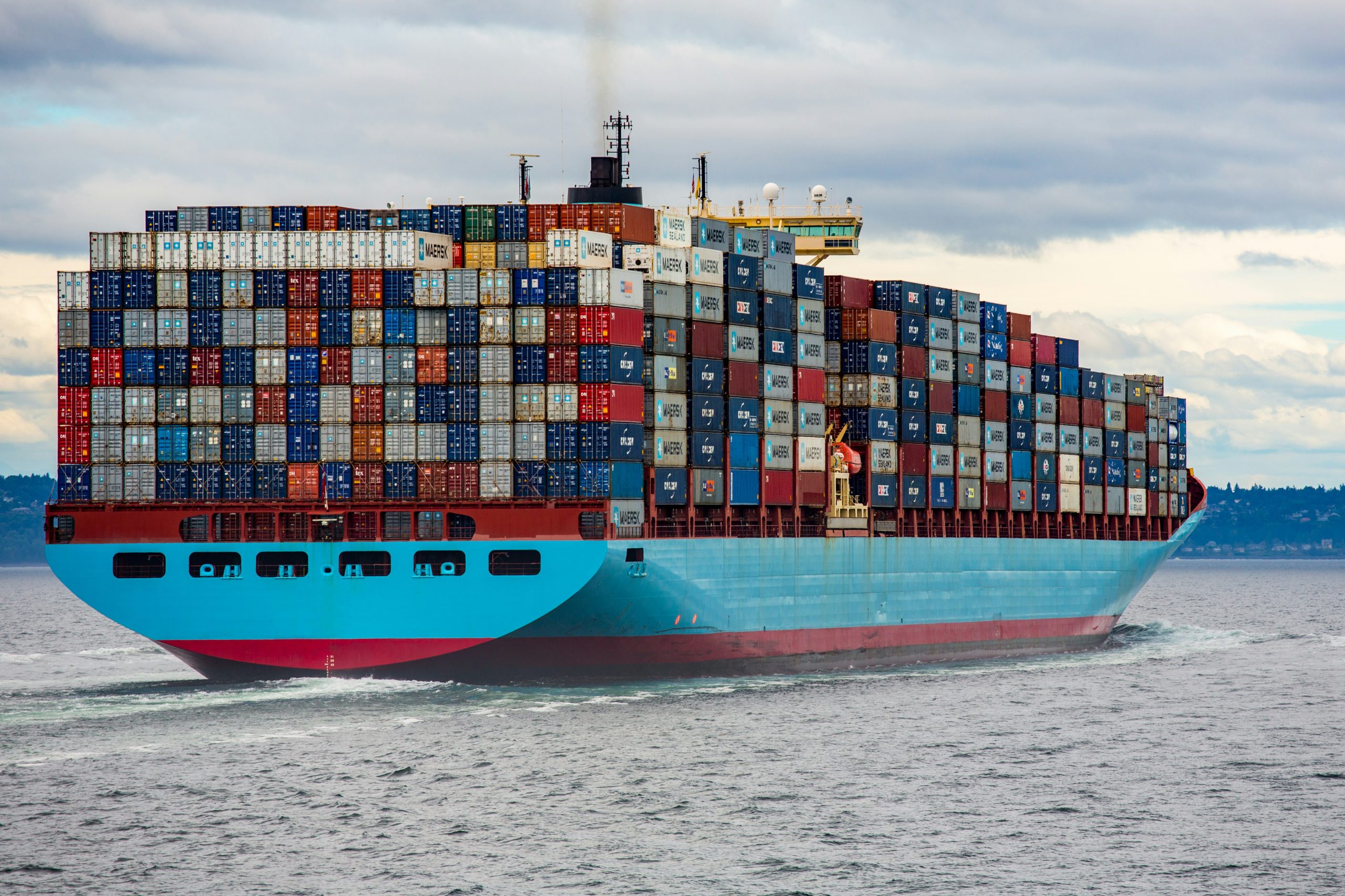
Photo by Ian Taylor on Unsplash