The era that defined my youth is cool again. After years of gentle roasting from Gen Z, Millennials everywhere are finally having a reprieve: the 1990s and 2000s are enjoying a comeback. Does this mean I can restore my side parting, dust off my skinny jeans? Absolutely not. But I can, at least, don my favourite scrunchie and listen to The Kooks.
But as fun as it is to indulge in reruns of Desperate Housewives, revisit problematic reality TV shows, and dress entirely in denim, there is something quite depressing about this particular edition of inter-generational nostalgia. Culture has always borrowed from history – there’s nothing new under the sun, after all – however, this time, the younger generation seems to be looking to the recent past not for inspiration, but as a means of escaping an increasingly intolerable present.
I’ve been doing it too, albeit slightly differently. Over the last 18 months I’ve developed a bit of an obsession with novels based in the war and inter-war periods. Despite being set in one of the cruelest and deadliest eras in modern history, books like The Cazalet Chronicles, Saplings, The Whalebone Theatre, and The Camomile Lawn have helped me escape today’s news of environmental collapse, famine, Donald Trump, and wars in Ukraine, Palestine, Sudan, and Iran. And that’s before I even get started on social media, AI, youth unemployment, and the manosphere. As little as I would have liked to live through the 1920s, 1930s, and 1940s, there’s something about the language, stoicism, and off-line-ness of that period that just feels simpler somehow.
Apparently, Gen Z’s particular nostalgia has its roots in the very thing they mocked us poor Millennials for in the first place: our freedom to be “cringe.” 1990s and 2000s kids grew up in a pre-algorithm era. Yes, we had Bebo, MySpace, and Facebook, but we could carelessly fill these spaces with photo dumps of messy nights out, pixilated brunch pics, and endless shots of ourselves with bouffant side partings, our heads tilted to an alarming 45-degree angle. Pre-video, we didn’t need to worry about being filmed tripping over on the dance floor or slurring our words, and – most importantly – the only people who followed us were our friends. Social media was chaotic; a shambolic jumble of shame-free shame. We were cringe, but we didn’t really care because no one was paying attention. Yes, we had our fair share of doom and gloom, but things were, relatively speaking, good.
But it seems that the one thing that wasn’t “good” in the 1990s and 2000s was wine – as evidenced by the fact that I haven’t seen a single mention of it in the many thousands of articles analysing the Y2K renaissance. As far as I’m aware, Gen Z-ers are yet to lament that their first wine experience wasn’t a three-for-one deal on Echo Falls or a flagon of over-extracted Merlot.
And I don’t think it’s the quality (or not) of these wines that’s putting off younger drinkers: if recent exposés into the evils of 1990s and 2000s culture have taught us anything, it’s that things don’t have to be “good” for us to romanticise them. America’s Next Top Model, skinny culture, the low-rise jean – these diabolical trends have all returned, however terrible we know they are for us. So why are twenty-something journalists not reminiscing about Prosecco, Pinot Grigio, and brosé, three perfectly cringe wine trends credited to the Millennial brain?
This is at least in part because these trends are far too recent: by the time my late-Millennial cohort was old enough to set wine trends, the 1990s and 2000s had passed on by and we were deep in the culturally bland waters of the mid 2010s. But it could also have something to do with the fact that we don’t reminisce about our wine-drinking past in the same way we do other cultural phenomena.
In The Death of Nostalgia, Champagne expert Tom Hewson observed that we no longer romanticise wine because wine nostalgia is ‘dead’. According to Hewson, bucolic visions of ‘blistered hands on worn wooden presses, jolly harvests […] mist rolling over hillsides striped with gold’ have been destroyed by social media: ‘In the 1990s,’ he wrote, ‘no wine amateur would have found themselves being told what the flavour compound guaiacol was, or how a pneumatic press works.’ In short, endless articles and Instagram videos aimed at “demystifying” wine have stripped it of its romance, pulling back the curtain to reveal stainless steel, chemicals, and science rather than magic and wonder.
Although I agree with this entirely, I would argue that wine nostalgia isn’t dead, it’s just quite boring. As much as journalists, wine professionals, and a handful of connoisseurs mourn the loss of traditional viticulture and ancient winemaking methods, talk of soil, horn silica, and hand riddling has so far failed to capture the imagination of young drinkers – even if they are more interested in the environment than previous generations. And the fusty stereotype of the “traditional wine drinker” as a ruddy-faced, corduroy-clad older gentleman toting a carafe of Bordeaux and a pipe doesn’t help either.
And then there’s the fact that wine has never been more exciting than it is right at this moment. In the 1990s, a wine from Greece would have been a novelty. Now you don’t have to look far to find bottles from Georgia, Armenia, Poland, Uruguay, China, Japan, and even Syria – sign up to The Wine Society and you could have them all delivered to your door by this time tomorrow. Unlike fashion, wine hasn’t progressed in cycles but has (for the most part) enjoyed a linear journey of continuous improvement: for all its faults, the more we learn and explore viticulture and winemaking techniques the better and more fascinating our industry becomes.
In the face of all this, is it even possible for the wine trade to tap into Gen Z’s penchant for 1990s and 2000s cringe and communicate the romance of wine to a generation that is notoriously uninterested?
I think it is, and Hewson’s article holds the answer. In his piece, he cites Perrier-Jouët’s iconic, flower-adorned Belle Époque as an example of the ultimate vinous ‘fantasy nostalgia’ because of the way it successfully captures the ‘spirit’ of turn of the century Paris. ‘Spirit’ is the key word here. Where other industries have approached 1990s and 2000s nostalgia with unwavering – and sometimes inadvisable – literalness, the trade could focus instead on promoting wines that reflect the care-free, un-serious, “cringe” vibes that inspired this nostalgic renaissance in the first place.
And in the bountiful wine world of 2026 the possibilities are endless: we have garishly pink rosés, cheeky sparkling reds, fruit-salad Beaujolais and unashamedly grapey Moscato d’Astis. We have OTT Gewürztraminers, Margarita-impersonating Vermentinos, embarrassingly sticky dessert wines, and cheeky coupes or kitschy Alsatian green-stemmed glasses. And why not make our recommendations environmentally friendly: what’s more earnestly cringe than an organic pét-nat stopped with a hipster crown cap? A tangerine-hued natural wine dizzy with enthusiasm and bubbles? Or even a can of Millennial Pink rosé, small enough to slip into the pocket of a pair of those awful low-rise jeans?
Wine nostalgia isn’t dead, we’ve just been taking it far too seriously.
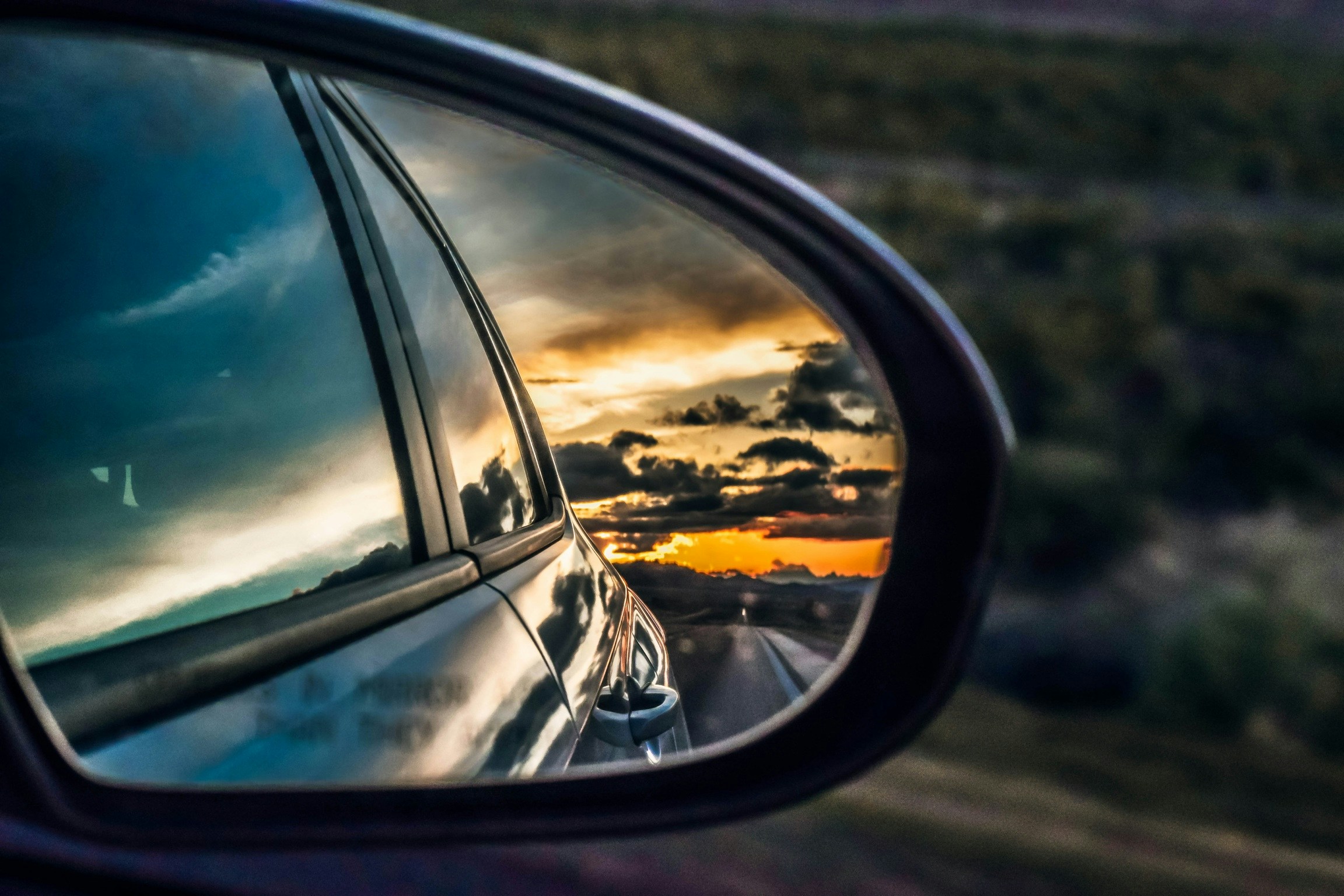
Photo by Jake Weirick on Unsplash