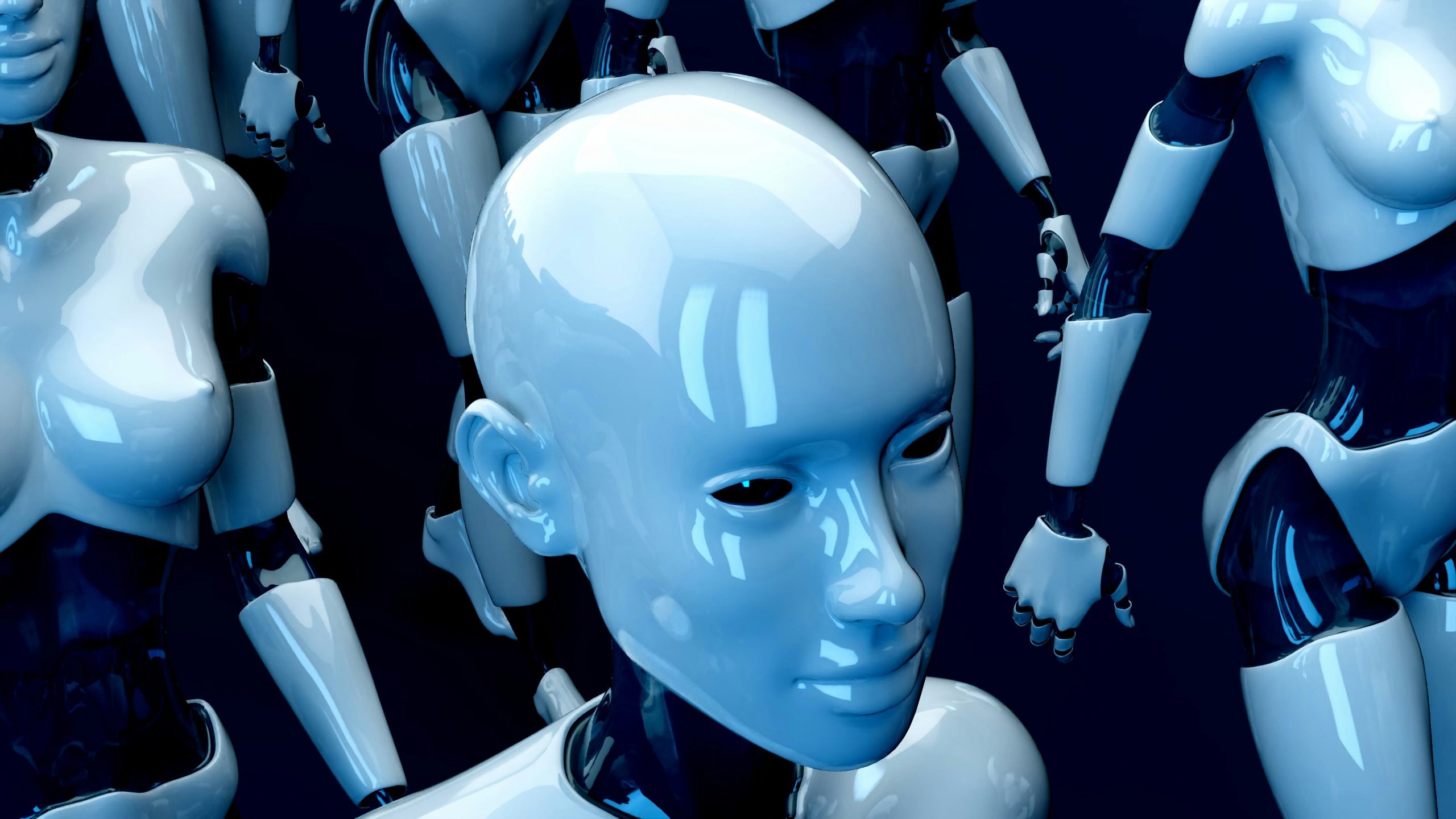
The year is 2029. First-world civilisation has adapted to mass surveillance. Waymos and Tesla Robotaxis chauffeur NPCs between work and their domicile. Porch Pirates have spared your paleo meal-prep subscription order… life is fantastically mediocre.
Dinner time has arrived and a monochrome rainbow of hope appears in the form of a text alert. Your “irl” friend has invited you to dinner; a new restaurant that micro-influencers have promoted on your social media called ‘Funt’. You agree to join, hop into your mobility appliance, and arrive at your destination unscathed. Excitement overwhelms you in anticipation of cultural and social nourishment.
Your prompt-to-arrive friend waves you over to a leathery, art deco corner of the dining room with appetisers pre-ordered and a bottle of Burgenland St. Laurent in the decanter. You take a seat, impressed that a rather civilian wine drinker has taken the liberty of ordering for you.
“Wow! It looks like the wine memes and articles I’ve sent have resonated,” you say semi-sarcastically with slight disappointment that your role as resident wine enthusiast has been taken. Your confidant excitedly reveals the scenario that led to his sudden burst of intuition, “The server wasn’t able to help with the wine list, so I used an app! I snapped a photo of the appetisers and wine list, submitted them to the app, and it recommended this Austrian wine to pair with the Mushroom-Jamón Arancini.” You begrudgingly accept the outcome. Once again, technology has interfered with the human experience. So, you reach for a glass and a serving of the dish. Your eyes widen at the perfection of the pairing. Your resentment for the robo-selected wine turns into confirmation — the AI actually worked.
Will AI ruin the wine industry, as so many fear today? Would it be more acceptable if these programmes were referred to as “software” instead of AI? Is AI in the process of taking the sommelier’s job, reducing it to an algorithmic formula processed through data centres and lining the pockets of the undeserving? Or… could it create a wine enthusiast out of someone who would otherwise have accepted a well cocktail in your absence?
The blue pill user may suggest that an app like this has the potential to fortify the wine industry with new customers and more diverse consumer habits. In the scenario where there is no expert to help navigate the wine list, it provides inexperienced consumers with a tool for some much needed guidance… assuming the app works properly.
Red pill side effects include the confirmation that AI has infiltrated the most sacred of wine enthusiast spaces — the dinner table — and that a[nother] layer of accountability has disappeared from the profession.
My feeling is that there is a purple pill outcome for AI-based wine apps. Since this topic has been covered in various publications — and rather annoyingly, through online ads — I’ve conducted some of my own experiments. Using some of the CellarTracker and food pairing AI programs, one thing has become hysterically apparent: You can tell when AI has been left to its own devices, and when it has been trained by food and wine industry professionals.
Keep in mind that the basis of this technology is not exclusive to sommelier and retail services. AI has been very helpful in the agricultural and winemaking sides of the industry, with programmes and interfaces that help identify where human intervention is needed. Once again, though, the technology must be exercised by a team of professionals, not trust fund tech bros.
Whether the intentions are benign, or exploitative, no AI model is perfect. It’s easy to tell when you’re being presented with advice that came from the first page of Google results and a Reddit post. Many of the AI interfaces fail to understand how a single ingredient can throw off an appropriate wine pairing, or how style and vintage variation can disqualify a wine from being the correct choice.
Other areas of compromise I’ve discovered include: rosés being confused with red wines, foreign language barriers, unawareness of flavour intensity in dishes… and Champagne being recommended for EVERYTHING. To add to the frustrations, these programmes often get corned into recommending the most generic, widely known brands instead of what is objectively — or scientifically — the best choice. That being said, there is a glimmer of hope in the world of underwhelming robo-somms.
I was recently introduced to a food and wine pairing app that, for the first time in my research, felt honest. The newborn SommPal app is a bit cleverer than a simple Q&A style randomised result generator. It allows you to submit photos of a menu and wine list, and for each menu item, it recommends up to five pairings ranked in order of most appropriate to least likely to clash. Each wine recommendation has a note that explains the logic behind the pairing, or identifies potential unknown factors that could compromise the experience. This gives the user the ability to clarify any nuances in the dish with the server. Speaking with developer Marc Lewin, he made it very clear that this software is not here to replace sommeliers, but to provide a service for novice wine drinkers in environments where an expert isn’t available.
When I first heard about AI leaking into the wine industry, I was apoplectic. “AI” has become a dirty word for good reason, although there is a stark difference in motivation and outcome depending on who’s behind the development. If the blandishments of wine culture can be amplified in a way that supports human engagement in wine, then I think the the use of AI, when piloted by the right people, is helpful. Whether we take the red or the blue pill, we just have to continue to keep these businesses in check.
Photo by Julien Tromeur on Unsplash