I hope you’ll forgive this column for being somewhat nostalgic. I want to begin by giving a picture of the wine-drinking habits and economics of a particular middle-class English family from the 1960s onwards. I am talking about my own family and you may know from previous articles published here that my father was a wine merchant.
So, not exactly a typical wine-drinking household – a household with a passion for wine which wasn’t that usual in England in the 1960s – but I’d say my parents shared their wine-drinking habits with many of their friends and contemporaries. And to bring economics into it, we were comfortably off but not rich.
The house had an underground cellar, which high up in the Chilterns, in those days, needed no encouragement to stay at a pretty even cool temperature. In its inmost recess there were some special bottles, mainly of red Bordeaux and vintage Port. They included (until the time they were drunk) some great vintages of Château Lafite, 1953 and 1959 among them. There was also at least one bottle of La Tâche (my grandfather’s favourite wine) which I remember being brought up to the airing cupboard on the first floor landing to be gently warmed.
In the main room of the cellar, and subsequently at our dining table, I recall at different times seeing such wines as Armand Rousseau’s Chambertin and Chambertin Clos de Bèze and Hermitage La Chapelle 1961, which we consumed one Christmas lunch, with my sister opting for Beaujolais, and the Corton-Charlemagne of Domaine Bonneau du Martray.
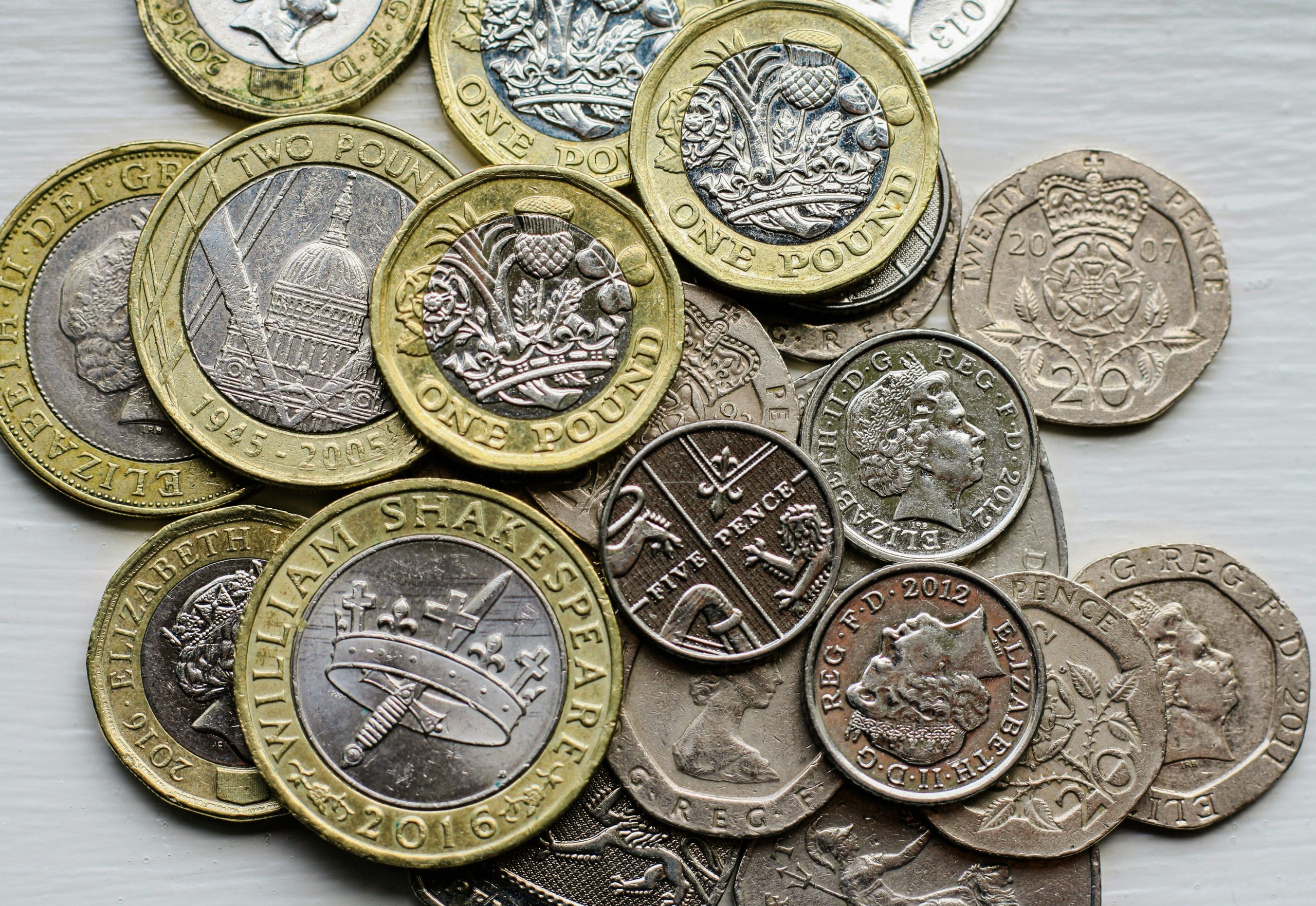
Now these might sound like very expensive, even cult wines. Nowadays they certainly are. But none of them was especially expensive then. My father had paid less than £2 a bottle, from local merchants, for the great vintages of Lafite from the 1950s. I don’t know how much he paid for the La Tâche but I suspect it wasn’t more than two or three times that amount. Of course he was a merchant, and acquired such wines as the Rousseau Chambertin and the Hermitage La Chapelle directly from the importer, O.W. Loeb. I’ve kept some of my father’s wine lists from the 1960s. Looking at the catalogue for 1964-5, Lafite 1953 is listed at 53 shillings (remember there were 20 shillings in a pound) a bottle. An Echézeaux 1959 (domaine not listed) cost 26 shillings, a Clos de Tart 1955 (then owned by Mommessin) cost 29 shillings and the most expensive red Burgundy was the Hospices de Beaune’s Beaune Cuvée Guigone de Salins 1953 at 31 shillings and 9 pence. A bit more expensive than any of these was Château d’Yquem 1945 at 48 shillings and 3 pence. In the list for 1969-70 Rousseau’s Chambertin Clos de Bèze is listed at 47 shillings and 10 pence. As late as 1989 Hermitage La Chapelle 1980 apears at £20. To make prices comparable, £1 in 1965 was worth roughly £25 today.
I need not labour the point, which is that such wines, in Britain in the 1960s and 1970s and even 1980s, were affordable by middle-class professionals, the local GP, the busy country vet, the sleepy country solicitor, even, dare I say it, the reasonably active wine writer. Now they are, pretty much, the preserve of plutocrats; financiers, hotshot lawyers, tech bros.
There may be no point in lamenting this fact, which is a function of vastly greater demand for limited supplies of top wines as well as of growing inequalities of wealth, accelerating especially from the late 1980s, but I’d say it raises a question for wine writers. Or at least for this one.
What does it feel like for a wine writer to be regularly writing about wines which he or she cannot afford to buy – wines which seem to be belong in a different world to the one he or she inhabits on a daily basis, the world of the Financial Times’s flagrantly ostentatious supplement How to Spend It, the world of luxury yachts and watches which are not for telling the time but for signalling status?
Of course many of us writers are lucky enough to be invited to tastings or events where we can taste and drink top Bordeaux cru classé and Burgundy premier cru and grand cru wines. But that’s not the same as living in the same world as them.
You might say my question is really about politics, economics and the rise of plutocracy. But it is also a question about wine and wine-writing. I’m always slightly surprised when I hear fellow writers say they don’t spend much on wine because they receive so many free samples. I think it’s not a bad idea to put your money where your mouth is. In my case that means buying wines mainly if not exclusively in the £12 to £30 range. That obviously cuts out cru classé Bordeaux, and nearly all Burgundy apart from the Mâconnais and Beaujolais. But there are many affordable delights, from Spain, Argentina, Portugal, the less fashionable parts of Italy, the Loire and Southern Rhône, and so on, including very good value cru bourgeois Bordeaux, and of course Sherry. I still think I drink quite well.
Oddly enough, there is a strange counterpart to this situation which consists of wine writers for upmarket publications, who themselves have quite sophisticated tastes, constantly plugging inexpensive and generic supermarket wines. No doubt they are doing this under considerable pressure from editors, but I wish they could resist that pressure a little more. It’s particularly galling when the same publications carry reviews of unfailingly rather expensive restaurants. Supermarkets have their place (as, say, do restaurant chains like Pizza Express), and some are really serious about quality, but the UK is still brilliantly served by independent merchants whose selections, often from smaller quality-minded producers, only cost a few pounds a bottle more and might be the kind of wines those writers themselves genuinely enjoy and feel excited about.
The other day the head of a small, prestigious Champagne house, a man I like and admire, said to me, “we do not cater to the general public.” He may only have been telling the truth, but I wish he hadn’t said that and it makes me less inclined to recommend his wines.
Photo by Sarah Agnew on Unsplash