Things can only get worse was a mantra of student life in the 1980s. Thatcherism was dystopic, a priori. Graduation was just a blip. We were all back in our berths at the union bar that evening. The tough thing about Chicago School monetarism was that it foreclosed on the futures that a university education was supposed to prep us for. On the upside, however, we were relieved of the burden of all the shoulds and oughts that traditionally came with a good degree. Self-worth seemed less about perfecting ourselves in the eyes of others and more about pursuing our own projects. Subsidised beer and holiday unemployment benefit were our proxies for 1960s psychedelics.
Compared to LSD, ego liquidation by beer is lagging and far less vivid. It took a lot of weak Hofmeister to tip students off the plateau of booze-induced social confidence and into oblivion. I failed on both counts. My otroversion was more than a match for the feeble ABV. While others drank to the point of forgetting their own names, I’d be intense, focused and dull. The next morning, I would fill in the gaps of my colleagues’ memory lapses. Clearly self-awareness wasn’t the epistemological gold standard Descartes had made it out to be.
The other, it’s said, is always within us. I was from Lincolnshire, raised within a tribe of sensible, insular cagoule-wearing folk who eat proper sandwiches and are all-in on the mission to reproduce the past. Could my talkative mother and present but completely unknowable father be squatting in my brain, living it small in a caravan? There were evenings in the bar when I was fearful that the beer goggles were morphing me into Joe 90, Gerry Anderson’s puppet school kid savant, yet the prospect of becoming my parents was much, much worse.
I was drowning in cheap beer by night and psychoanalysis by day. Freud, who habitually hangs us on the hook of family affaires, writes in Civilisation and its Discontents: “Life, as we find it, is too hard for us; it brings us too many pains, disappointments and impossible tasks. In order to bear it we cannot dispense with palliative measures.”
Freud’s “palliative measures” became a palliative in its own right. Drinking, I told myself, was a means of coping with differences and separation. Neither remedy nor poison, as Plato had clear-headedly reasoned about something much more noble than lager. Better to show fidelity toward this emergent bookish sub-conscious than repress it. If I was to stay true to my desire and lessen anxiety, I needed to find a more abundant source of alcohol. One with a hobby element.
My first session wine was Plovdiv Bulgarian Cabernet Sauvignon. It was of the earth and of the people in a way my comrades’ cans of Royal Dutch Lager weren’t. Cheap, dark and tannic with a lingering aftertaste of iron curtain. I liked the fit. I could stay in the effervescent flow of just-graduated existence while nurturing this fragile new pastime into something more enduring.
Cabernet Sauvignon became a go to. The great acceleration in global wine production was underway and Australia and California both provided impressive versions of the variety. I tried spending a bit more on bottles and was, for the most part, rewarded. Opus was never intended to be the opium of the people (opioids do that job), but California was a blue state, and with Bob Hawke in The Lodge both it and Bin 707 made the weekend cut.
I bought a copy of Hugh Johnson’s Wine Atlas and began experimenting with Bordeaux. My life took on the mantle of a vinous ouroboros. I poured myself into wine education, heart and soul (and liver), enrolling on a couple of WSET courses, then I poured this knowledge into myself every evening. There was all-round relief when I finally took to spitting, repulsive and expulsive as it is, which suggests this positive feedback loop had a negative impact on those around me. I became a tasting machine. Wine was reified into an object discoverable through its sensory qualities rather than its mood changing effects.
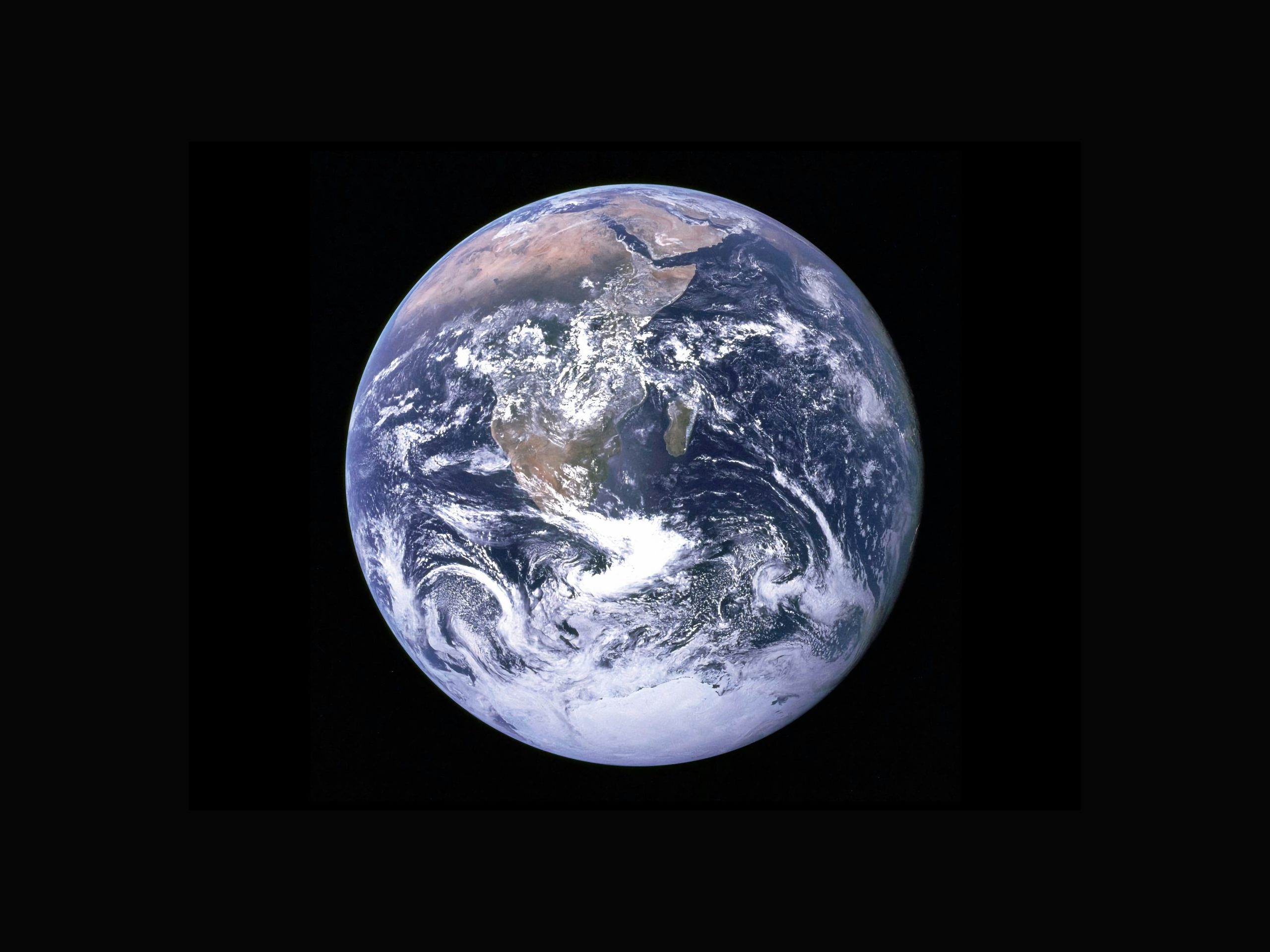
To properly get a feel for the vastness of space you need to escape the Earth. The purview of stars and planets multiplies once you’ve out-muscled gravity. Wine education can have a similar dynamic. You either reach escape velocity and acknowledge how little you know, or you stay on the surface, anchored to what’s familiar.
“I know what I like” is crushing for those of us who have climbed the ladder of wine education. It’s the certainty that really grates. When the Vintners’ Company set up the Institute of Masters of Wine in the 1950s, presumably their aim was to structure wine education around dependable English merchant types. A commonwealth of wine with London at its heart. Such rational exuberance may have seemed justified when the limits of production were so fixed, yet once the rest of the world got in on the act the push for omniscience faltered. In the expanded universe of wine there is no unitary position, no end, there are only points of departure, unless you’re that bigot with the stacked trolley of BOGOF Malbec.
I’m trying to resist the urge to go all Lincolnshire and put decades of separation between me and my desire, because nearly everything that existed back in the 1980s isn’t worth a rerun. To be positive for a moment, as students we weren’t sluiced into debt, and holidays were covered by the DHSS if you felt there were better options than slogging through character building night shifts at the pea factory. Nor did we have to dodge the government draft that wants to turn all able sixth formers into engineers. There was an opportunity to jink like knights across the chessboard rather than be pawns that can be shuffled from square to square. Just as teenagers have to familiarise themselves to new body settings, so an educated mind needs time to evaluate possibilities. Subjectivation isn’t a switch.
We can only interpret our desire after the fact. Retrospectively. Exchanging pleasure for enjoyment isn’t just semantic. The latter has an arc of difficulty as well as satisfaction. For what cause other than desire would I have taught myself chemistry, botany and geology?
The shift from beer to wine 40 years ago was a decisive event. I peeled off into the atomised world of producers and grape varieties then slowly pieced things together in some small ways that seemed to work as work, theses and friendships. I count myself lucky to have lived in the age of Paul Draper; even met nice South Africans. “I’ve known adventures, seen places you people will never see. I’ve seen it. Felt it!” To quote Roy Batty.
Photo by NASA on Unsplash