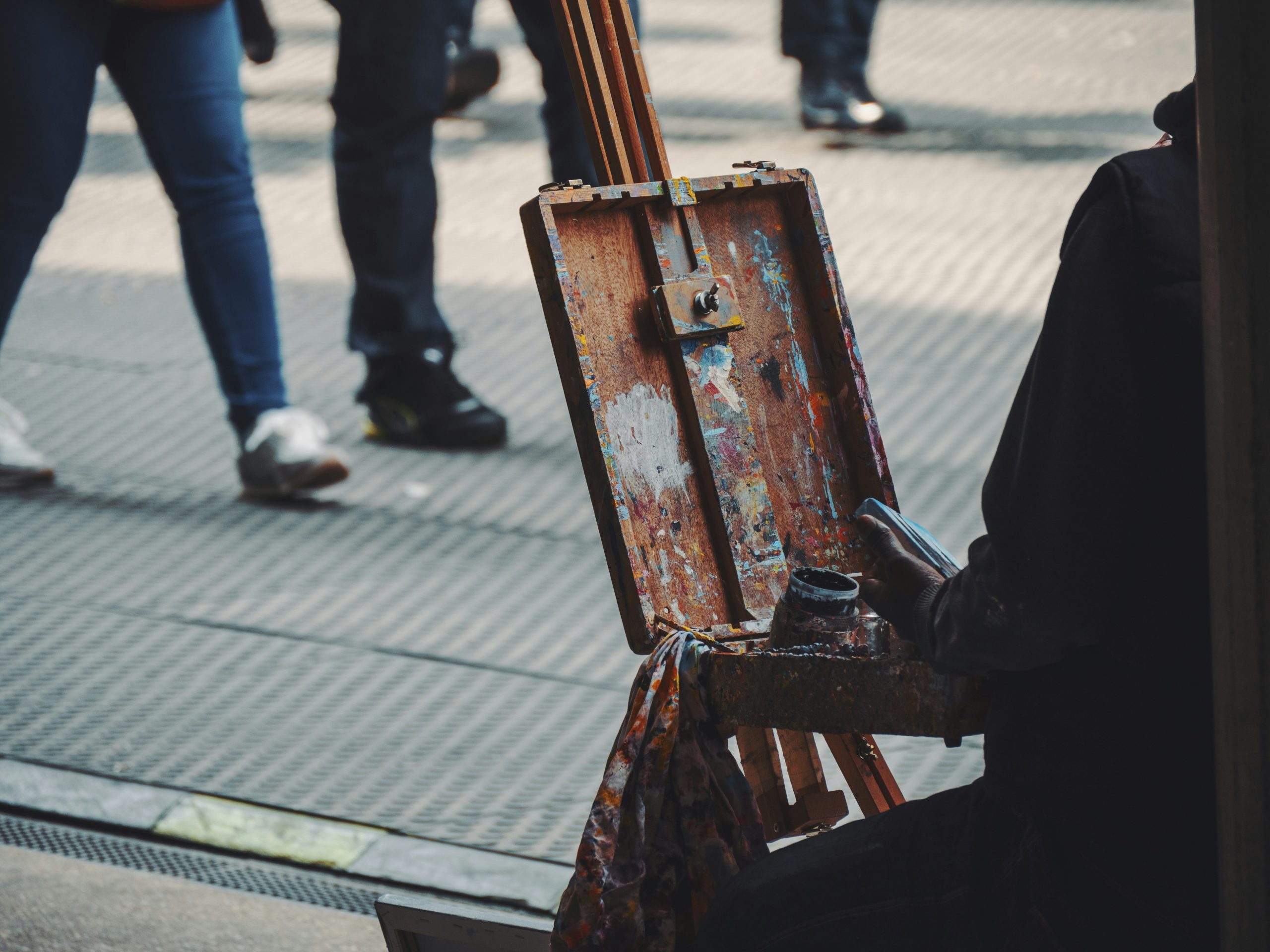
The psychoanalyst, Donald Winnicott, observed of creative life that, “It is a joy to be hidden and a disaster not to be found.” Van Gogh’s work was unappreciated for most of his life, while Kafka’s demand to have all his papers destroyed at his death is arguably, or at least should have been, the last word on artistic solitude. Writing was so immanent to Kafka’s life, so distinguishing of his existence, that he wanted his work to die with him.
Working within production I’ve grown wary of people elevating winemaking to an artform. I don’t have a snappy definition of art to offer you, but I do know that unlike painting and writing the world impinges heavily on our day-to-day activities. Grapes don’t conjure up the limitless potential of an empty page or a bare canvas. Imagination is restrained. Repetition – leaf removal, racking, topping up, assays, pressing fractions – may eventually give expression to veiled forces and stylistic tropes, but this emergence largely turns on the combinational possibilities of materials already present within the environment.
Art criticism needs its objet. In a piece of self-flattery, ennobling wine’s status dignifies the profession of those writing about it, so it has to be frustrating when your muse goes completely off-script and starts riffing on the self-organising properties of yeast, must and bacteria. Moreover, rushes of critical ecstasy tend to be reserved for bottles drawn from the very top of the Burgundy and Bordeaux hierarchies. The boundaries of our modest art are difficult to draw. Where exactly does the heavy toil stop and the more feely creativity take over?
Robotic, codified takes on wine quality is another red rag. Marking the MW practical, I became grumpy with candidates whose tasting notes channelled a wearisome ontological flatness. Telling me that Ridge Monte Bello has M+ tannins and M+ alcohol is technically accurate but joyless.
In a roundabout way, I’ve spent much of the last 20 years trying to distinguish the givens of climate and soil from the ways in which winemakers make use of them. Maximising the potential of a particular site comes down to individual decision making, but the ceiling of that potential largely lies outside our management and control. If producers of Chambertin downplay their sense of individual agency it’s because they appreciate that a vineyard’s reputation isn’t going to die with them. One can put an artistic spin on domaine withdrawing from négociants’ vats – the solitude, and their risking everything for creative autonomy – but most entrepreneurs can share similar stories of sacrifice. And yet, still nagging away at me, is a sense that encounters with great bottles can feel like encounters with great art.
Five years ago, I visited the galleries and chapel of the Hospital de los Venerables Sacerdotes in Seville. The last room I went into was a converted crypt. The walls were covered in a grey render, and what limited lighting there was lingered on a few small paintings. I was drawn to a Vélazquez portrait on the far wall. There was something irresistible about the picture. The face of the artist’s wealthy subject radiated out under its own brightness and energy, separating from the dark tones of the background. Moving closer still, staring into the darkly lacquered eyes, I felt myself held by the painting’s gaze. In that moment, I experienced what seemed like the soul of the picture, an enormous presence set free from the constraints and method of its production. Completely out of character, I began to cry.
On refection, the intensity of my response seemed to draw upon some latent vulnerabilities. Reification is the process through which we park the inconvenient truths of a commodity’s production so it can blend in with modern lifestyles. Sublimation, on the other hand, is much more personal and raises the status of an object from the ordinary to the extraordinary. In that moment, my critical faculties were overwhelmed by the directness and fullness of the encounter; and that effect was particular to me. The crypt wasn’t filled with weeping middle-aged men like a scene from Pluribus. The presumed structure of perception and agency was rebalanced toward the work of art. In some sense, the portrait had found me.
The affecting special bottle is a recurring theme in many trade biographies. Lives and careers pivot on a feeling of plenitude, euphoria even, that accompanied the opening of a particular wine. Alain Badiou writes that genuine events are rare and life changing. “Two become one” when we fall in love, and it’s not far-fetched to think that encounters with great wine can also have forever consequences. For many of us in the trade, wine is an attachment we’d struggle to live without.
If you follow its prescriptions and theorising, then psychoanalysis can help us out here. Melanie Klein wrote about the investment of the drives in particular objects. Things that seem trivial and unimportant to one person are precious to another. Moreover, the hold these sublimated objects have over us may, in part, be compensatory. Ahab’s real prosthetic supplement, the thing he really can’t live without and will die bound against, is Moby Dick, not his ivory peg; and the upright Bruce Wayne is a thug once he’s behind the wheel of the Batmobile. Did the Vélazquez play a similar role, giving expression to some heavily censored part of my personality?
Notwithstanding the fact that self-analysis is generally discouraged, my wine event, in the full- strength Badiouean sense, was with Latour 1961. I didn’t evaluate the wine’s qualities systematically; instead It forced an experience of perfection upon me. Tasting notes are a form of capture but the Latour was so specific and absolute that it bypassed the usual dynamics of judgement to cast its spell over me.
There have been other wines since: Monte Bello 1971 and, most recently, Porseleinberg 2023. These wines successfully carried the burden of expectation, but they are outliers. The majority were potential fodder for unjustly punishing notes when the joyful excesses of the Latour failed to materialise. In the sense that the unconscious is like this other tenant taking up head space, there were always two of us fighting over the pen at trade tastings: one desirous and demanding, the other cognitive and inquiring.
Marketers will jump on the last point. One of the profession’s mantras is that brands have both a head and a heart. Among the many criticisms levelled at psychoanalysis is its tendency to intellectualise cliché, though not here. In cravenly emphasising the positive, marketing habitually falls on the side of reification. We’re encouraged to scroll through its lists of available brands and show obedience to modern life’s superegoic command to shop. What gets skirted past in this fray is the fragmented and sublimated nature of individual desire.
Pulling these threads together, I’m still not convinced that winemakers are artists in the way we ordinarily use the term. One reason we are drawn into thinking of them as such is a confusion between cause and effect. Great wine can very occasionally touch and change us in the way great music and painting can, but that shouldn’t prompt us into thinking there’s some correlative activity going on behind winery doors involving art and artists. On the flip side, we are getting much smarter at elaborating the factors that go into producing particular wines. I don’t believe there is an additional and overriding argument to be made about how something gets generated from nothing.
On the way out of the Hospital de Los Venerables I walked past the entrance to the chapel. The Valdès fresco above the main altar was excessive, over the top, more form than substance from an atheistic perspective. Christianity doesn’t hold the monopoly on transcendence; the enormity of existence can do that job without us needing to fall back on the deeds of a great creator. And just as we can have religious-type experiences without believing in God, so one can also have, on a much more local scale, an artistic experience with wine without the support of an artist.
Photo by Daniel von Appen on Unsplash
I am firmly against the assertion that winemakers are artists, or that wine is art. How many times have we been told that a great wine is 90% the grapes? But no one looks at a Van Gogh and thinks it’s 90% the paint. Winemakers who call themselves artists are like politicians who call themselves ethical–best avoided, and more than likely to be after your money.