At a recent Pinot tasting, a leading South African producer long known for elegant wines firmly denied that they had ever copied Burgundy. Fair enough. We all want to be original; we all firmly believe that we are. And yet this producer had planted Pinot. At Hyde de Villaine in California, they deny copying Burgundy; yet they planted Chardonnay.
This might hang simply on the finer shades of meaning of the word ‘copy’. At Corney & Barrow’s new offices there is an old canvas, a well-worn still life of fruit and Chinese porcelain. It was painted, I would guess, towards the end of the 19th century, but it is a copy of 17th century still lifes. That does not mean it’s a fake; it doesn’t seek, I would guess, to be taken for anything other than that which it is. But there is nothing original about it. It was inspired by 17th-century still lifes and painted by someone who, I would guess, wanted to produce something as beautiful and graceful as the pictures they admired. To admire something and want to do the same, to the best of your ability, is a human trait: I keep seeing pictures online of women who want to look like the late Carolyn Bessette Kennedy. If you don’t want to call it copying you could call it having a role model. We all need role models. We all have role models.
If the C&B picture’s resemblance to a 17th-century picture is accidental – if the artist had never seen a 17th-century still-life and produced this by accident, then I am breathlessly awaiting the complete works of Shakespeare to be thumped out on a keyboard by a chimpanzee. I shall have a go now, hitting random keys, with my eyes focused on the ceiling: jsekjkjtieu[9valkn/lrjtoiub0fua.
Not quite ‘To be or not to be’, is it? Maybe I should do what winemakers have always done when they’re not copying somebody: spend many years tasting and studying what they’re not copying.
This, by the way, is not an attack. It is not even a criticism. Instead it is to point out that we all copy everybody, all the time. When we leave the house in the morning, we will have taken care over what we wear (some more than others, you might think…). That is why 50% of people on the London Underground in winter will be wearing a puffer jacket, usually black. That is why jeans and trainers are ubiquitous everywhere. We want to express ourselves, don’t we? And that’s how we do it: by fitting in. Even if I were to decide that I would be original in my dress, how would I do it? A crinoline? Not the least bit original. Body paint and feathers? Ditto. Tattoos? Thousands of years old. The ghastly trout-pout might have been original to begin with, although Google tells me that paraffin was (unsuccessfully) injected into lips as early as 1900, but it certainly isn’t original now.
That I can’t think of any way of dressing that is actually original and hasn’t already been done, somewhere in this wide world, over the last 10,000 years or so, is a testament to my own lack of originality. It is also true that if you want to sell something, you need to be more recognisable than original. If I were to write this in an invented language you would have given up by now. If I were to punctuate it in an original way I would have had a questioning email from Tim. The real challenge is not to be original; it is to be excellent.
Chapeau, then, to the two producers who gave me the idea for this column: both are excellent. Am I suggesting that originality can be a cloak for lack of excellence? Yes, I am. (‘Can be,’ please note, not ‘is’.) It can also be part of a learning curve which, if a wine or anything else is to be economically sustainable, must end in excellence.
Look at natural wines. When they started they wore their faults like combat medals, with pride and even ostentation. That was the start of a learning curve which has reached, now, a degree of excellence. We all know the arguments about wine faults being faults just because somebody said so, and we have realised that usually faults are faults because they don’t taste very nice. (And yes, I know that tastes and palates change and are moulded by what’s available. Having drunk what might be the world’s worst coffee on Eurostar last week, I started wondering what coffee tasted like in the more primitive conditions of London in the 17th century. If it was as horrible as Eurostar’s is now, why did it ever catch on?) I don’t remember early natural wines claiming originality, to be fair, although to palates raised on technical correctness they did taste pretty unusual. But not original, to anyone who remembered those faults from the past.
They have evolved now into something rather original: a fusion of naturalness and (although naturalistas might reject the concept), modern ideas of correctness. Because this is what originality is in wine: something that emerges, perhaps unexpectedly, between your vision of perfection and what you can do, here and now. It’s in the things less obvious to the outsider: the way a grower takes advantage of a quirk of climate or topography. (I won’t say soil: I’ve just read Alex Maltman’s Taste the Limestone, Smell the Slate, and I shall never again ascribe any flavour to soil. Ever.) Or the conditions in the winery, like Langham in Dorset making wine in old farm sheds without a shred of climate control, and using the inevitable variation between barrels to produce wines with their own character. (As Sherry, Port and Madeira have also always done, of course.) Or in seeking out ancient and nearly extinct grape varieties, as Torres and others have done, and making them to contemporary standards.
Originality in wine does not have to be the same as inventing something from scratch. It’s more likely to arise from accidents, or accidental finds. Which is to the credit of producers: it takes imagination and openness to use accidents to advantage. Bravery, too: it’s safer to conform as closely as possible and take no chances. But if you planted Pinot Noir outside Burgundy in the 1980s it was the epitome of risk-taking. You had no models other than Burgundy, and any other crazies also planting Pinot were themselves in love with Burgundy. Their supreme achievement has been to make superb wines that challenge Burgundy on its own terms.
So much so that there are many Chardonnays and Pinots out there that it must be very, very difficult to place in a blind tasting: Domaine Drouhin might have been the first to lead a prominent critic astray, but wasn’t the last. They’re not carbon copies: these wines have their own character, and that’s what makes them convincing. Burgundy isn’t just one thing, either.
If I were to start from scratch to try to produce a convincing version of a 16th-century tragedy, possibly featuring, let’s say, the moral conundrum of a 6th-century Danish prince, based on a traditional Scandinavian tale (Shakespeare saw no need to invent his plots) how would I do?
‘kjt;jip4jtoij34iajut’.
No wonder I admire wine producers.
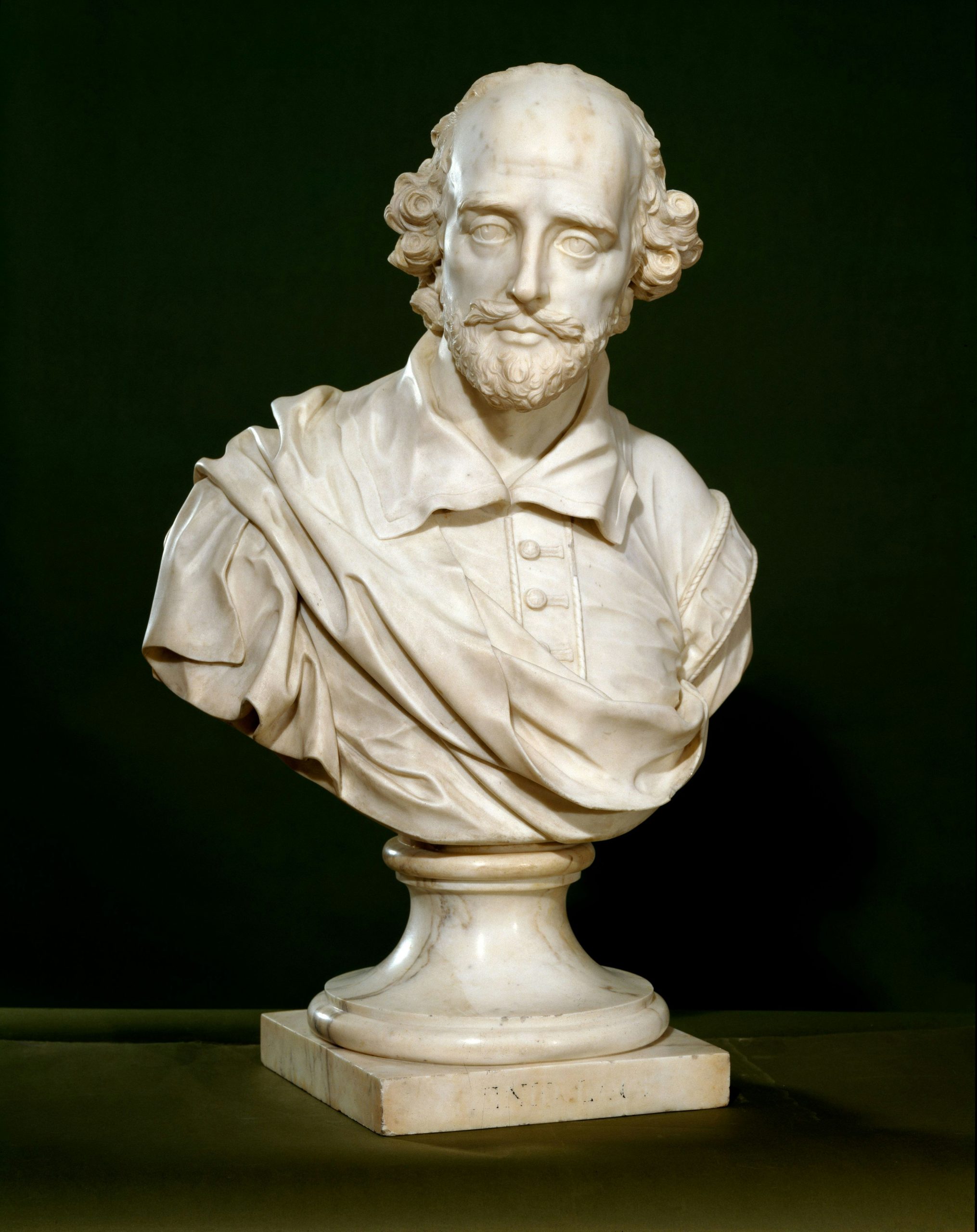
Photo by Birmingham Museums Trust on Unsplash