I stood there watching Mark Zuckerberg welcome the new year with an announcement that Meta goes MAGA, and I knew that I should feel worried, angry or afraid, but a bunch of other things were going through my mind instead. Firstly, that he looked like the answer an AI would give if prompted to imagine the eponymous protagonist of Mrs Brown’s Boys as a Bond villain. Secondly, that his watch was probably intended as a display of ostentatious wealth but, compared to his net worth, it was like me proudly sporting something I picked up at Poundland (I was wrong – it was cheaper than that).
But mostly I was thinking, jeez, can’t you guys get anything right? Peter Thiel, another tech blandosopher-king with a tendency to give out his heart the ancient Roman way, famously once lamented that “we wanted flying cars, instead we got 140 characters”. Now, nobody who has spent more than a few months coding, and has a connection with the real world, ever considered this facsimile of genius as the type that would bring about flying cars. But, dude, is it too much to ask not to muck up the 140 characters also?
The obliteration of the press by the technology robber barons has been documented by journalists themselves, rather passively, perhaps because of an underlying feeling that there was nothing that could ever befall the press moguls of old of which they were undeserving. But while journalists were clear enough on the demise of their own industry, they never seemed equally lucid to the greater transition that was taking place.
Sometime in the mid-2000s, Silicon Valley transitioned (sorry, “pivoted”), from capitalising on some rather neat work by electronic engineers and computer scientists, to outright stealing. A remarkable range of activities that would be considered illegal somehow became not just tolerated but celebrated if it happened via an “app”. Clandestine, unregulated hotels? Pirate taxis? Your own invented money? Global broadcasts of any sort of misinformation, obscenity, or just plain old incitement to violence? All par for the course. And now, since there are no industries left to disrupt, “tech” is just disrupting itself.
Yes, I admit I have pushed the concept of the opening statement a bit but, bear with me, there is a link to wine. Because, while I am on record stating that the offering of the wine world to drinkers has never been so good, I also increasingly worry that wine communities are on their way to being dissolved. By “wine communities” I don’t mean just random groups of wine drinkers, those are thankfully alive and mostly well, but communities of people who treat wine as an object of aesthetic and analytical criticism and interest.
A brief history of wine communities might be useful here. Back in the mists of time, in the pre-critic era, wine communities developed organically, at least in places that had a wine culture. Drinkers were meant to have some passing interest in wine and varying levels of amateur involvement. Countries that did hobbies seriously (looking at you Britain) might even go as far as to have groups forming around wine, as opposed to wine being an accoutrement to existing social relationships. It is easy to romanticise that period, but the truth is that it was a wine merchant’s world: you drink what you have access to. Where there were wine writers, those were more like wine trade courtiers, reinforcing existing power structures.
The introduction of the wine critic as an identity and role is, in retrospect, quite a remarkable development. It is also almost entirely unrelated to wine itself. Instead, it is the product of a specific point in time in the development of journalism: the printed, or published, word is authoritative enough to be taken seriously, but not so demanding as to have prohibitive barriers to entry; it is disseminatable enough to be widely accessible, but not given away so cheaply as to feel valueless. Its impact is transformational. For the first time ever, a global wine community and wine conversation emerges. The consideration of wine as an aesthetic object worthy of serious criticism, and the discussion of the right frameworks of analysis for this, skyrocket. With this, the interest in wine, globally, explodes. Local communities slowly form along the main lines set at the global level.
Now, I am not in any way saying that the wine criticism of old was perfect, but its failings have been detailed exhaustively, and pretty much from day one. But I think it is not too much of an exaggeration to argue that most of the development of wine in the past 40 years owes its existence to this concept, and to how much more interesting it made wine itself. Wine criticism has been much maligned, but the truth is that there never was a dictatorship of taste. There were exactly two groups that experienced Robert Parker’s boot as such. Those that want to sell to the super-rich, and those that thought that deciding the wine pecking order was a divine right that stemmed from a gentleman’s degree at Oxbridge.
Either way, the digital revolution put paid to the role of the critic. Not immediately; there was a brief honeymoon period when the Web, acting as an auxiliary to what it is now calling “legacy” media, actually augmented wine communities. The conversation felt more global, more direct, and more accessible than ever. But the cracks soon began to show. Removing practically all barriers to entry, meant authority was now hard to find, a practically lethal blow for the critic business model. And words on a computer screen always seem to feel less worthy of remuneration.
A newspaper is called efimerida in Greek, indicating its daily occurrence, but etymologically echoing the ephemeral nature of the writings in it. Digital writing instead exists in a temporal Schrödinger paradox. It is at the same time eternal (how many times can you write a wines for Thanksgiving piece, when the previous six are out there, forever and immediately retrievable?), and instantaneously fleeting (every second your reader spends on your words, comes with an opportunity cost, a pulsating FOMO for the other two thousand just-released texts that vie for their attention).
We were promised that this demolishing of the old order would bring democratisation. Crowdsourced information, crowdsourced ratings, the precious wisdom of the crowds. Have you met crowds? As often, the more someone declares the answer lies with The People, the more they mean with the subset of the people that will give the answer they want. In a way, it’s comforting to see Silicon Valley going full MAGA. At least the pretence is dropped.
What I find strange, however, is how complacent the wine industry seems to be about this. If anything, people seem relieved. No critics to answer to, only “influencers”, advertising by other means. Everyone can build their own narrative. We are back to the 1950s, only the clothes don’t look so nice.
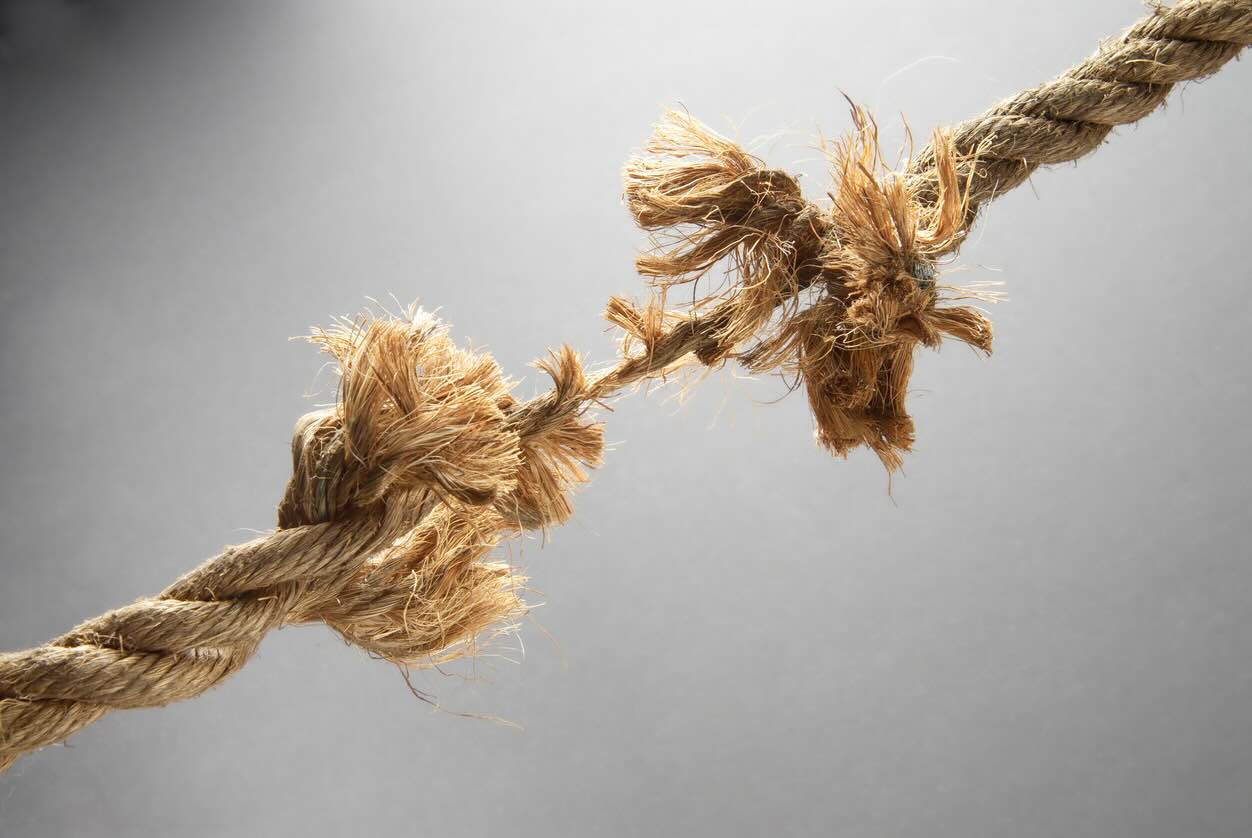
Only, that is an uncertain road for wine to follow. Destroy the means of communication, and you have destroyed the communities. Destroy the rules of the game of criticism, and you’re left with no game. Who would watch football if nobody was counting goals, and everyone was left to make their own decisions on the beauty of the game? Other hobbies that revolve around a primarily aesthetic element, such as cinema or to a lesser extent, music, are much more robust. But wine, or at least wine as we have known it the past 50 years, depends on highly involved, highly committed communities. And communities need lodestars and communication channels to exist, especially in a market as wildly fragmented as ours.
Will wine, and wine connoisseurship, disappear if the communication landscape continues the downward path it seems to be taking? Of course not. After all, there were wine communities in the 1950s. But they fewer, more dispersed, less committed – and not willing to spend as much. Which, by the way, is perfectly fine with me. I could easily do with my favourite wine becoming cheaper. Maybe I shouldn’t be so frustrated with Mrs Brown, and let her go on chasing Mr Bond after all.
Photo by Anthony Boulton on i-Stock